
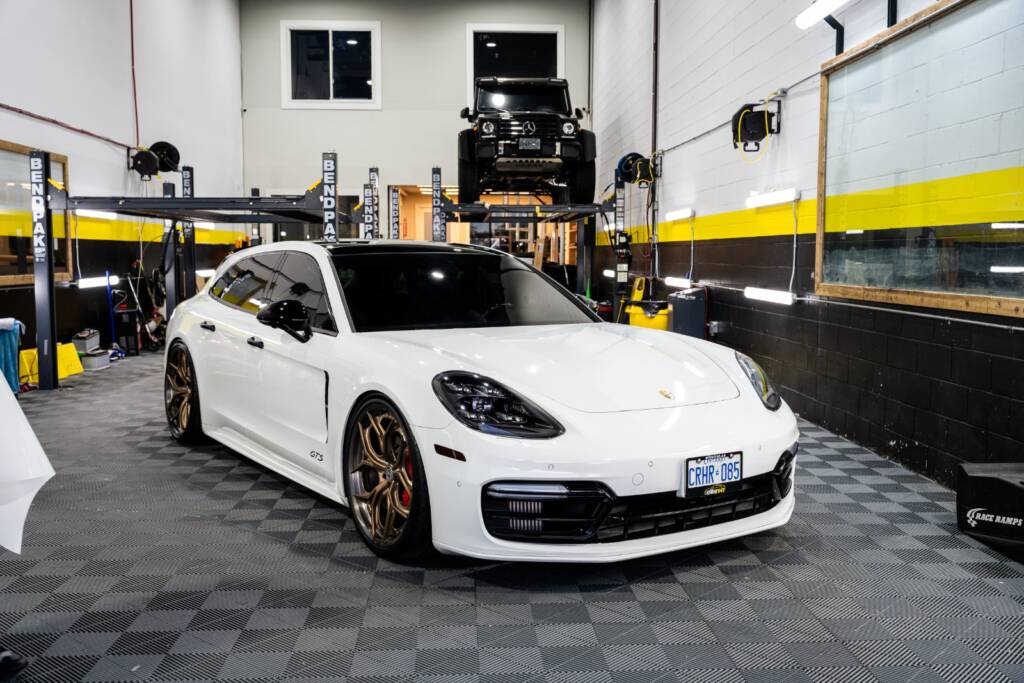
PPF is a physical shield against impact, while ceramic coating protects the surface and adds gloss. Both protect your car, but they solve different problems: PPF absorbs impact before it reaches your paint, while ceramic coating bonds to the paint and repels water, dirt, and UV. As paint protection film installers in Toronto, we break down what each one actually does, where they overlap, and which makes more sense for your vehicle and how you drive around the GTA.
What Is Paint Protection Film?
Paint protection film (PPF), often called clear bra, is a clear urethane film applied to your vehicle’s most exposed panels, including the front bumper, hood, fenders, mirrors, and headlights. PPF for cars is essentially rock-chip protection: it absorbs impacts from stone chips, road debris, salt spray, and bug splatter before they reach your paint. Many PPF products, including XPEL PPF, are also self-healing, so light scratches and swirl marks disappear with heat from the sun or warm water. On Toronto and GTA roads, where winter salt and highway debris are a constant, PPF gives your paint a durable physical barrier.


What Is Ceramic Coating?
Ceramic coating is a liquid paint protection coating applied by hand, then cured to bond with your vehicle’s clear coat. Once cured, car ceramic coating creates a hard, glossy layer that sits on top of the paint rather than absorbing impact. As a hydrophobic coating, it repels water, so rain and road grime bead up and slide off instead of sticking. Ceramic coating also helps guard against UV fading, bird droppings, and light contaminants, and it makes regular washing faster. What it won’t do is stop a rock chip. Ceramic coating protects the surface, not against physical impact. For details on our packages, see ceramic coating in Toronto.
PPF vs Ceramic Coating: Main Difference
The main difference between PPF and ceramic coating is how each product protects your car. PPF is a physical barrier, so it is built for impact: rock chips, road debris, and light scratches. Ceramic coating is a chemical bond, so it is built for surface protection and appearance, including gloss, UV resistance, and easier cleaning. Both help your paint hold up longer, but they solve different problems. The table below breaks down how each performs across the protection needs you’re most likely asking about.
| Protection Need | PPF | Ceramic Coating |
|---|---|---|
| Rock chips | Best protection | Minimal protection |
| Road debris | Strong protection | Limited protection |
| Light scratches | Good, often self-healing | Some resistance |
| UV protection | Good | Good |
| Gloss enhancement | Maintains or improves appearance | Strong gloss boost |
| Water repellency | Some films offer it | Very strong |
| Easier cleaning | Helps | Excellent |
| Winter salt protection | Strong on covered panels | Helps on coated surfaces |
| Cost | Higher | Usually lower |
| Best for | Physical damage protection | Gloss and maintenance |
Should You Get PPF, Ceramic Coating, or Both?
Choose PPF if
PPF makes sense if you drive the highway often, want real rock chip protection, or own a new, leased, luxury, or high-value vehicle. It’s also the right call if you specifically want to protect the front bumper, hood, fenders, mirrors, headlights, and rocker panels.
Choose ceramic coating if
Easier washing, more gloss, and better UV and chemical resistance point to ceramic coating as the better fit for you. It’s the right choice if appearance and ongoing maintenance matter more to you than impact protection.
Choose both if
The strongest overall protection comes from combining both, if that’s what you’re after. PPF on your vehicle’s high-impact areas paired with ceramic coating over the rest gives you impact protection plus a coating that makes cleaning easier across the whole vehicle.
Best Option for Toronto Drivers
Toronto driving puts real stress on car paint. The 400-series highways carry loose gravel and construction debris at speed, and GTA traffic means near-constant exposure to road spray from other vehicles. Winter brings salt, slush, and sand that chip and etch paint over months of driving, and warmer months bring bug splatter on longer highway stretches. All of this affects resale value if paint damage goes unaddressed. If you’re driving in Toronto, PPF on the front end is the better starting point if the main concern is preventing visible paint damage, since it stops impact before it happens rather than protecting the surface after the fact.

Conclusion
The right starting point depends on what you’re trying to protect against: impact or day-to-day wear. If rock chips and road debris are the bigger concern, start with PPF. If gloss and easier washing matter more, ceramic coating makes more sense, and if you want full coverage, combine both. Our team at Elite Tint has over 10 years of automotive experience and can look at your vehicle to recommend the right option for how you drive around Toronto and the GTA.
Contact us today to book a consultation.FAQ
Why doesn’t ceramic coating stop rock chips?
Ceramic coating is only a few microns thick and bonds tightly to the surface, so it has no cushioning to absorb an impact. PPF has real depth and thickness, which lets it take a hit from a stone or debris before it reaches your paint.
Which one is better for shine and easy cleaning?
Ceramic coating is the better choice for shine and easy cleaning. It creates a hydrophobic surface that sheds water, dirt, and grime, so washing takes less time and your paint keeps a deeper gloss between cleanings.
Does adding ceramic coating on top of PPF make sense?
It’s a common combination, and one we offer as a named package: FUSION PLUS PAINT & PPF. Ceramic coating adds a slicker, glossier finish over the film and makes it easier to keep clean, while the PPF underneath keeps absorbing chips and debris.
Is PPF worth it for a new car?
For most new vehicles, yes. New paint is more vulnerable to rock chips and road debris before it has aged, and protecting it early helps preserve resale value. For a closer look at the pros and cons, see Is PPF Worth It? – TOP-5 Pros and Cons.
Which one lasts longer?
PPF typically lasts 5 to 10 years with proper care, depending on the product and maintenance. Ceramic coating typically lasts several years up to about 8, depending on the coating tier. Combining both is common because the film protects the paint while the coating protects the film.
Which one costs more?
PPF usually costs more than ceramic coating for full-vehicle coverage, though entry-level PPF packages can start lower than ceramic coating depending on how much of the vehicle you’re covering. Your final cost depends on coverage, vehicle size, and which panels you protect.


